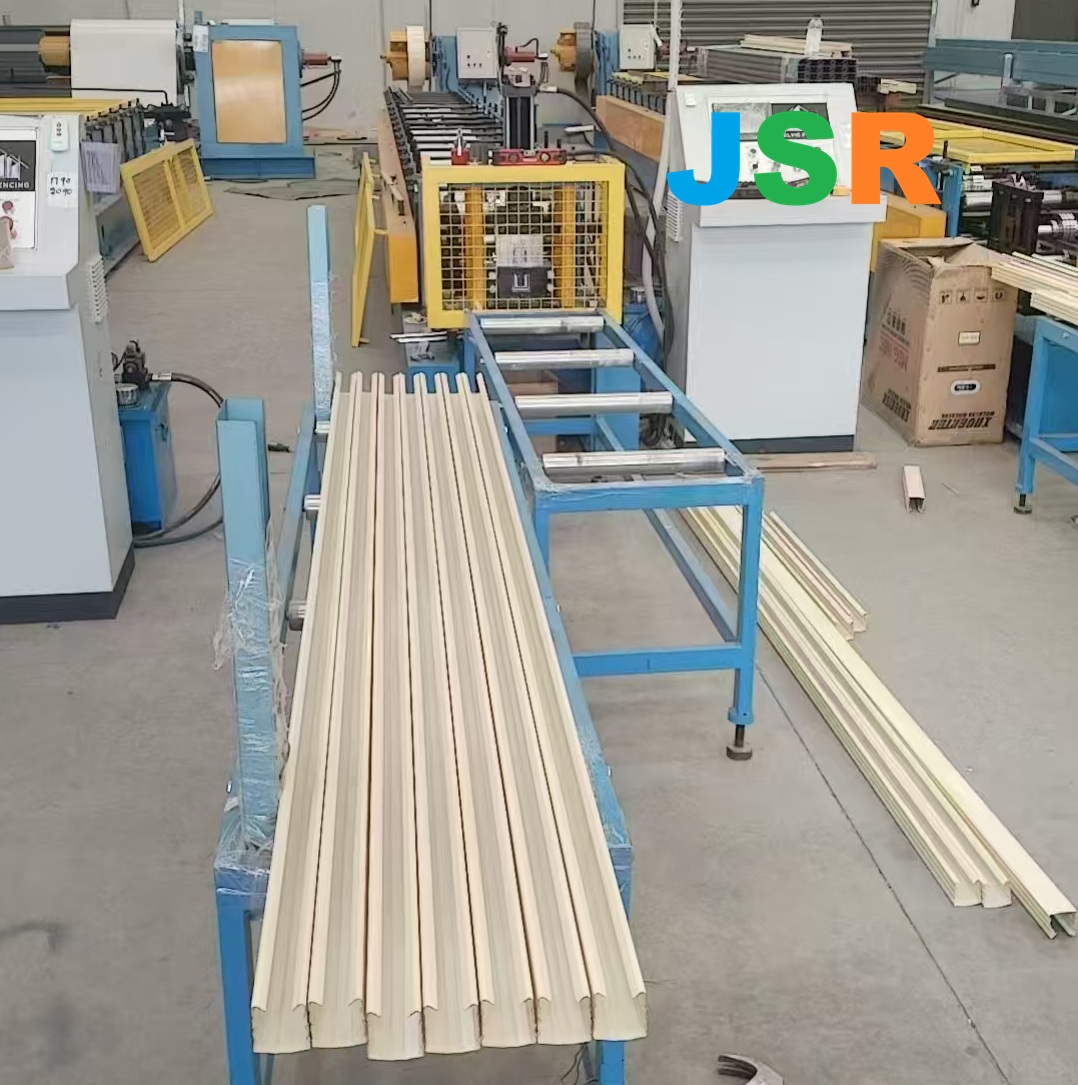
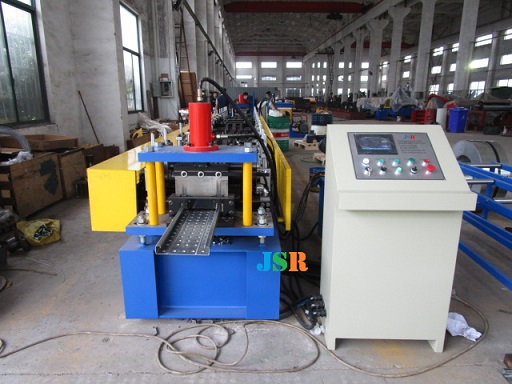
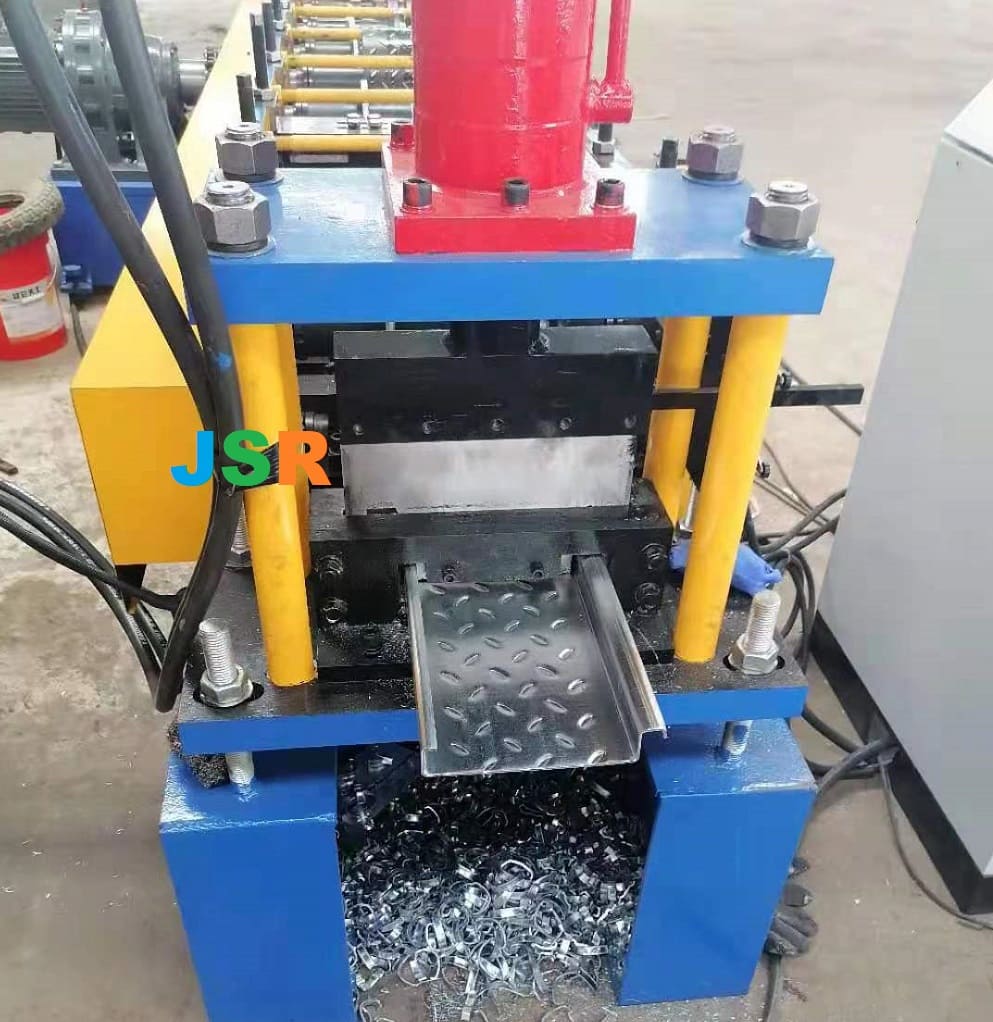
When buyers evaluate a scaffolding plank roll forming machine, one of the most practical questions is not just which supplier to choose, but which plank type to produce.
The two common directions visible on JSR’s own pages are:
- perforated scaffolding planks
- embossed walkway planks
This makes the real buying question:
Should you invest in a perforated scaffold plank machine or an embossed walk board roll forming machine?
This is not a minor detail. It affects the hole system, surface style, product positioning, and how easily the output matches the access-platform preferences of your target market.
What Is a Perforated Scaffolding Plank?
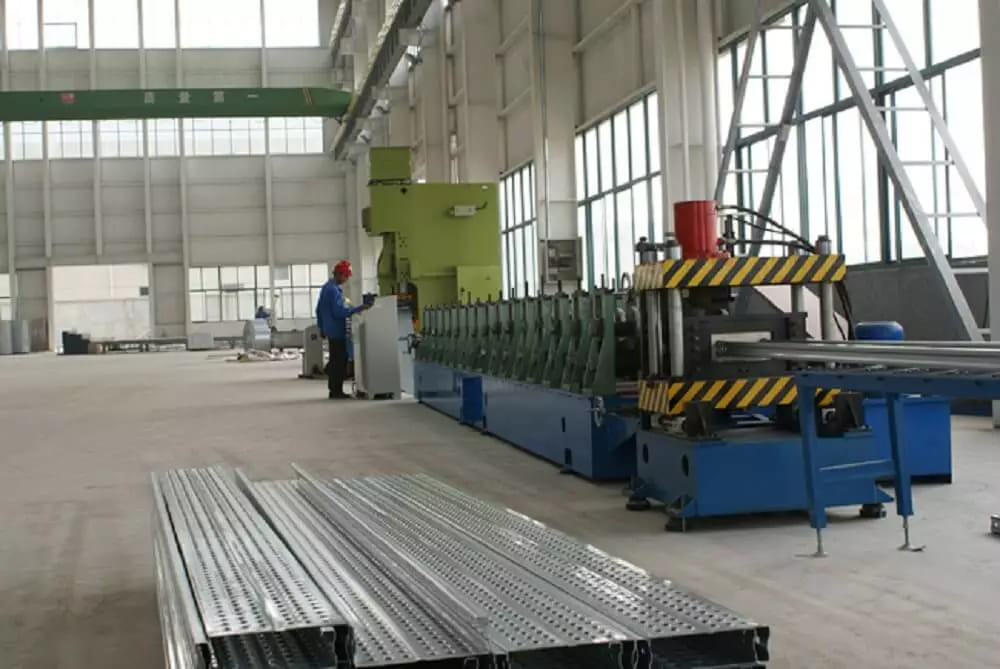
A perforated plank is a steel scaffolding plank with punched holes. JSR’s galvanized perforated walkway planks machine page states that steel planks use anti-sliding hole and drainage hole patterns.
A perforated scaffolding plank roll forming machine is therefore usually associated with:
- punched anti-slip function
- drainage openings
- more obvious hole pattern design
- strong practical scaffold-board identity
In many markets, this is the more recognizable scaffold board machine direction.
What Is an Embossed Scaffolding Plank?
An embossed plank uses formed surface texture rather than relying only on perforation. JSR’s steel walkway planks machine page specifically describes a line making embossed scafforlding planks, or walkway planks or pan, and notes the machine is equipped with emboss rollers.
A steel walk board machine in this direction may be attractive where the product is positioned more as:
- walkway plank
- platform pan
- embossed scaffold plank
- specialized steel access board
The Main Difference
The difference between perforated and embossed production is not just appearance.
Perforated scaffold plank machine
Usually emphasizes:
- anti-slip holes
- drainage holes
- punched functional openings
- classic scaffold-board style
Embossed walk board roll forming machine
Usually emphasizes:
- embossed surface texture
- different surface handling
- visually distinct walkway profile
- a different production approach in the forming section
JSR’s own pages support both directions as distinct product variants.
When Perforated Plank Production Makes More Sense
You should lean toward a perforated scaffolding plank roll forming machine if:
1. Your target market expects anti-slip and drainage holes
JSR explicitly points to these holes as functional plank features.
2. The buyer base is more scaffold-system oriented
If the product is being sold clearly as a scaffold board machine output, perforation may be the more straightforward market fit.
3. The market is used to conventional steel planks
Perforated planks often align with the most direct functional understanding of scaffold planks.
4. You want a clearer functional selling point
Hole pattern and drainage function are easy for buyers to understand.
When Embossed Walkway Plank Production Makes More Sense
An embossed steel walk board machine may be a stronger option if:
1. Your market prefers embossed walkway products
Some buyers search more for walkway planks machine or steel walk board machine than for plain scaffold-board terminology.
2. You want a different product position
Embossed planks can be positioned as more specialized walkway or platform products.
3. Your customer values embossed surface treatment
In some applications, the product style and surface geometry become part of the selling proposition.
4. You are targeting a slightly different industrial usage angle
The wording “walkway plank” or “pan” can appeal to related access-platform applications.
Which One Is Easier to Sell?
Perforated plank machine may be easier to sell if:
- the market already understands scaffold boards in classic perforated form
- contractors expect anti-slip and drainage holes
- the product is sold directly into scaffold-system channels
Embossed plank machine may be easier to sell if:
- the market uses walkway-plank terminology
- buyers want embossed steel platforms
- the application is broader than only standard scaffold boards
The better choice depends on what local buyers already recognize and request.
Which One Has Better Business Potential?
Perforated scaffold board machine business potential
Often stronger when the market is direct, construction-oriented, and familiar with punched steel plank products.
Embossed steel walk board machine business potential
Often stronger when the market uses specialized walkway language or values surface-formed products.
In some cases, the easier-to-sell option is not the one with more features, but the one that matches buyer expectation most closely.
Common Buyer Mistakes
1. Choosing by appearance instead of market demand
A product may look more impressive but still be harder to sell.
2. Ignoring whether the market expects holes
If anti-slip and drainage holes are standard, a plain alternative may be weaker commercially.
3. Confusing scaffold board and walkway plank positioning
The naming and use-case language can matter in sales.
4. Buying a machine before confirming the real product need
The product strategy should come first.
5. Assuming one style works everywhere
It does not. Buyers should confirm which plank format the market already uses.
FAQ
What is the difference between a perforated and embossed scaffolding plank machine?
A perforated machine focuses on hole-based plank production, while an embossed machine focuses on surface-textured plank forming.
Does JSR make both types?
Yes. JSR has pages for galvanized perforated walkway planks machine and for steel walkway planks machine making embossed planks.
Why are holes important in perforated planks?
JSR states that steel planks use anti-sliding holes and drainage holes.
Why are emboss rollers important in embossed plank production?
Because the embossed style is formed through the rolling process, and JSR explicitly notes emboss rollers in that machine type.
Which one is better for a beginner?
Usually the better option is the one that matches the product buyers in your local market already use.
Can a buyer expand later into the other type?
Yes. Many manufacturers can start with one product direction and expand later once demand is proven.
Which one is better for scaffold-board branding?
Often the perforated style is easier to associate directly with scaffold board terminology.
Which one is better for walkway-plank positioning?
Often the embossed product direction is easier to position as walkway plank or pan output.
What matters most in this decision?
The most important factor is market fit, not personal preference.
What is the biggest buying mistake?
Choosing machine style before confirming the actual plank product demanded by the market.
Choosing between a perforated scaffolding plank roll forming machine and an embossed walk board roll forming machine is not about which one seems more advanced. It is about which one your market actually wants.
If your customers expect anti-slip and drainage-hole plank products, a perforated scaffold plank machine may be the stronger commercial choice. If your market prefers embossed walkway products, an embossed steel walk board machine may make more sense.
The right machine is always the one that produces the plank your target buyers are already ready to buy.
Related Articles
Related Product
Learn More