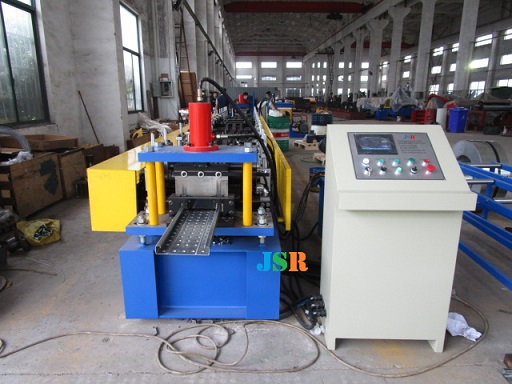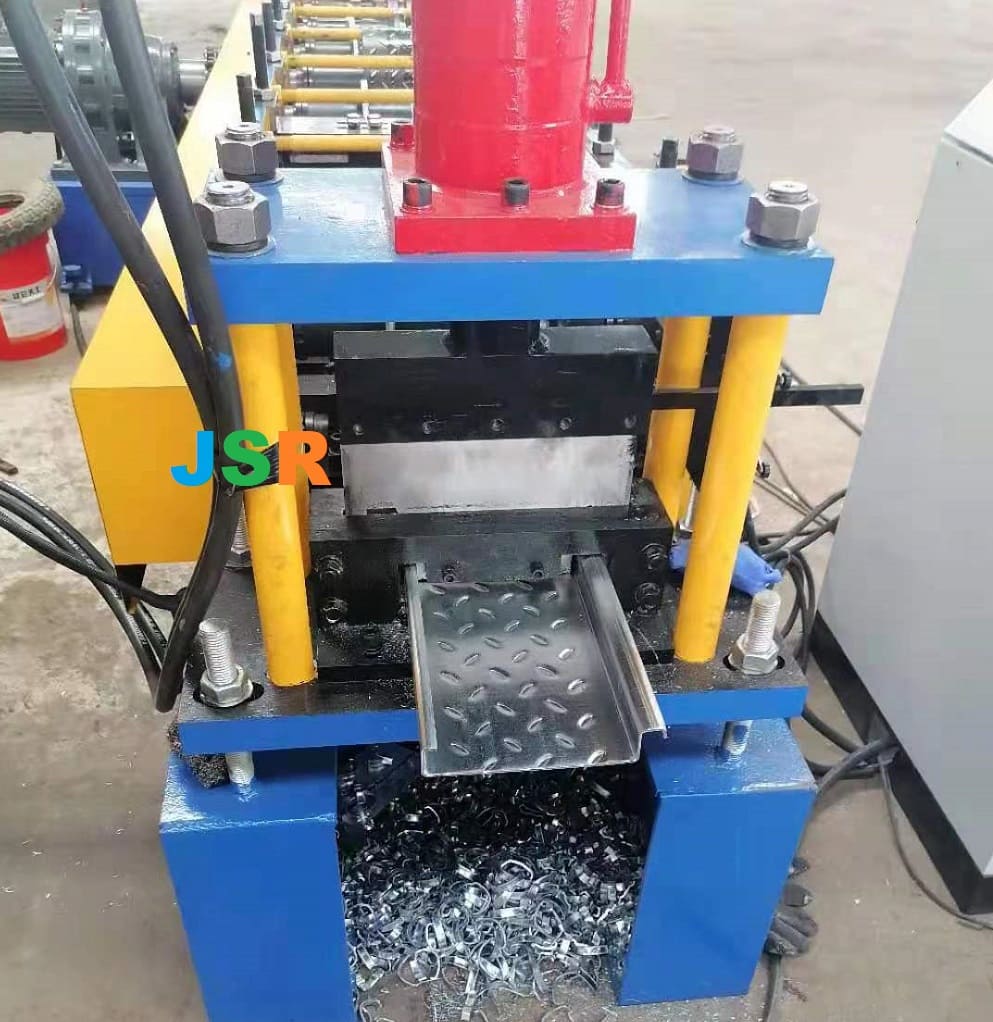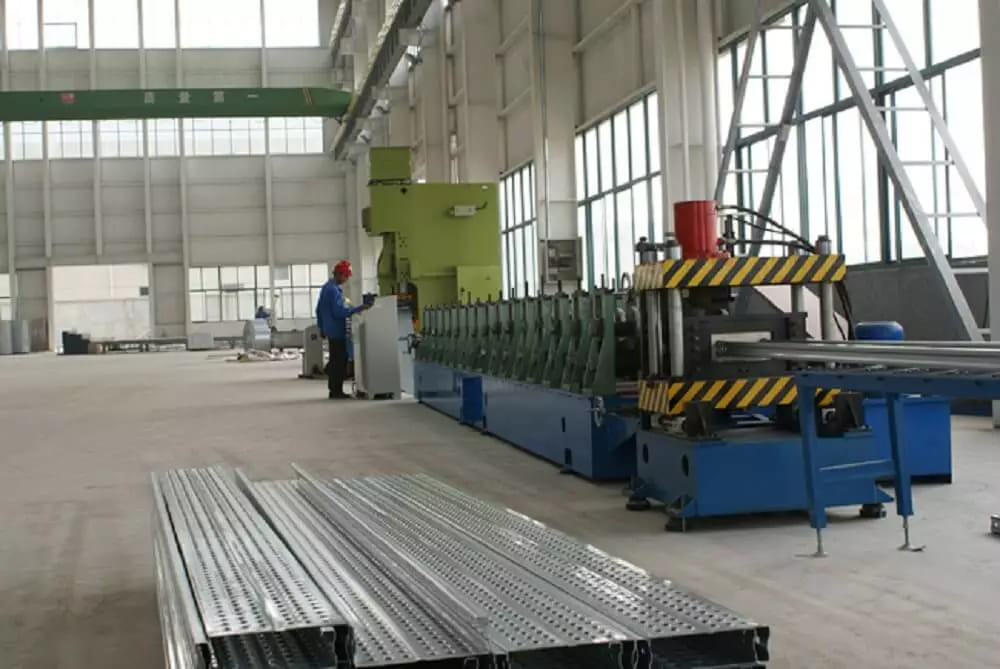

For manufacturers entering the scaffold-access product market, machine cost is one of the first serious decision points. But the price of a scaffolding plank roll forming machine depends on more than the machine name.
A scaffold plank machine may vary in cost depending on:
JSR’s own scaffolding pages show enough variation to make this very clear. It describes hydraulic-punch plank machines at around 4 to 6 m/min, punch-machine versions around 10 m/min, and embossed walkway plank machines with 11 kW main motor and 3 kW hydraulic motor in one listed setup.
The cost of a scaffolding plank roll forming machine varies because this category includes different production goals.
Some buyers need:
JSR’s pages explicitly distinguish between perforated and embossed plank production, and also compare hydraulic punch and punch-machine approaches. That means a quotation is tied to the actual plank business model, not just a generic machine title.
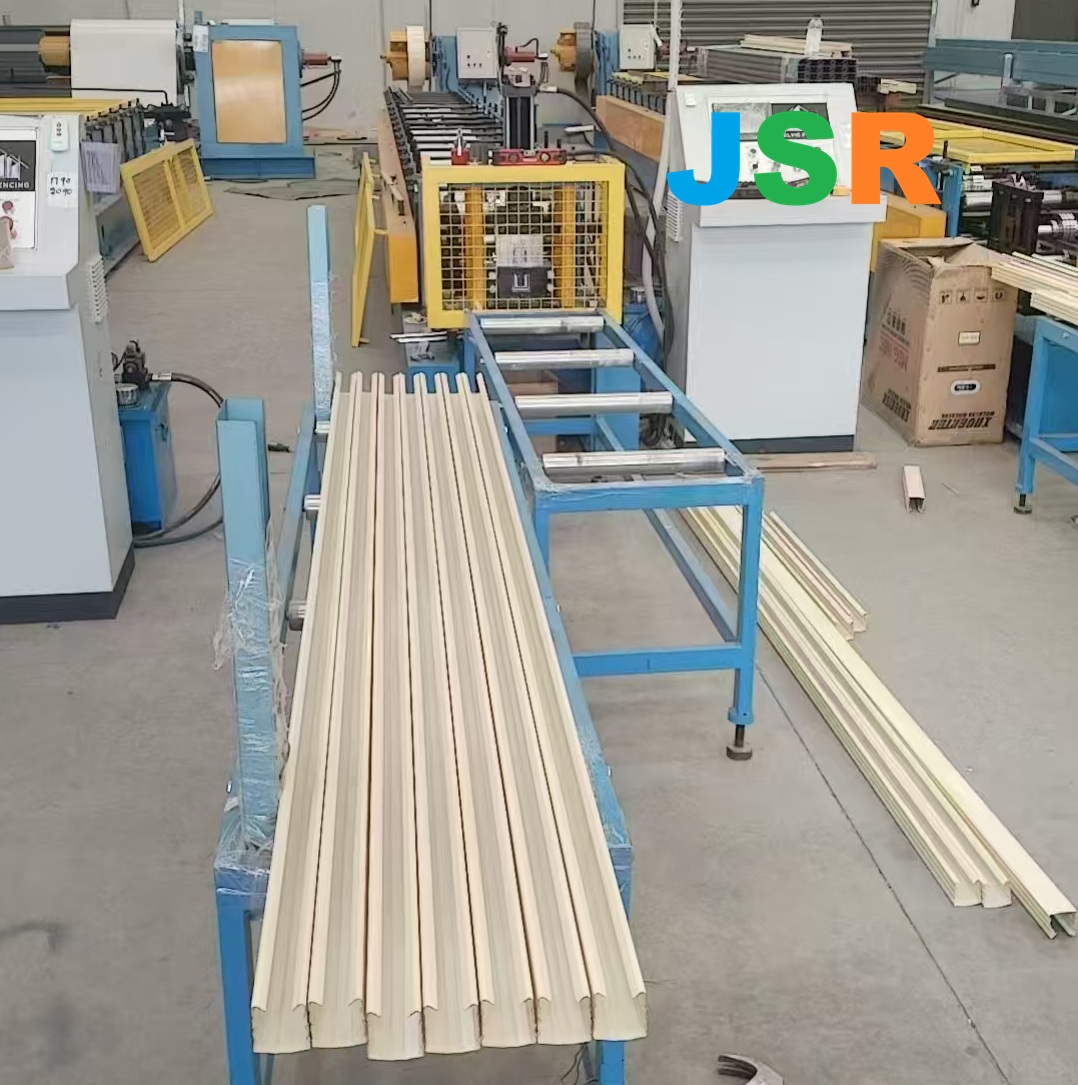
A scaffold plank machine for perforated products may have different punch and tooling requirements from an embossed walk board roll forming machine. JSR has separate pages for perforated and embossed plank directions.
JSR repeatedly compares hydraulic punch and punch machine solutions. It notes that hydraulic punch is more economical, while punch-machine setups can support higher speed in some cases.
JSR cites speeds around 4 to 6 m/min for several plank machine cases, and around 10 m/min where punch-machine logic is used. Higher speed usually increases cost because the whole line must remain stable under faster production.
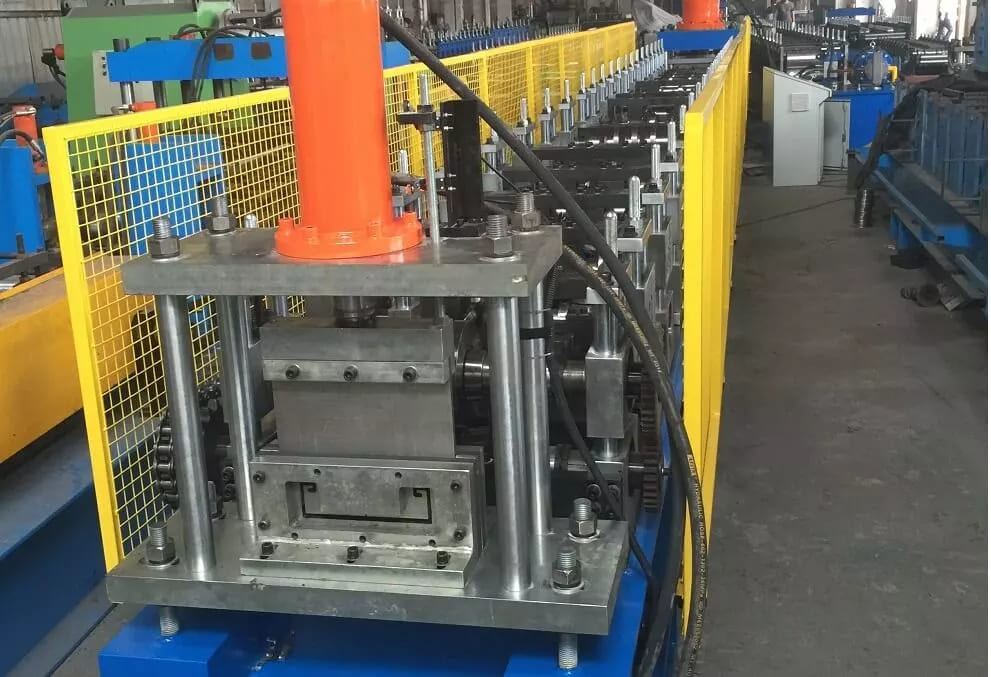
On the Saudi Arabia case, JSR lists a setup including 3 ton manual decoiler, leveling device, hydraulic punch device, and forming system with post cut, which shows how the included equipment affects the overall machine value.
JSR notes that gearbox can be designed in the machine for transmission, which can affect both price and machine strength.
In its embossed walkway plank page, JSR lists a machine powered by 11 kW main motor and 3 kW hydraulic motor, indicating how power requirements can affect cost.
A low-cost scaffolding deck machine may sound attractive, but if it cannot maintain:
then the commercial value drops quickly.
Because the output is used as a working platform, product consistency matters. A weak steel scaffolding plank machine may create issues not only in visual quality but also in buyer confidence.
For some manufacturers, yes.
A scaffold board machine can be a practical entry into a more industrial, access-related steel product category. Compared with simple sheet production, it offers:
JSR’s project and case references for Saudi Arabia and Israel support the idea that this category is commercially active beyond just local sales.
When comparing quotations for a scaffolding plank roll forming machine, buyers should also include:
A machine quotation alone never shows the full production investment.
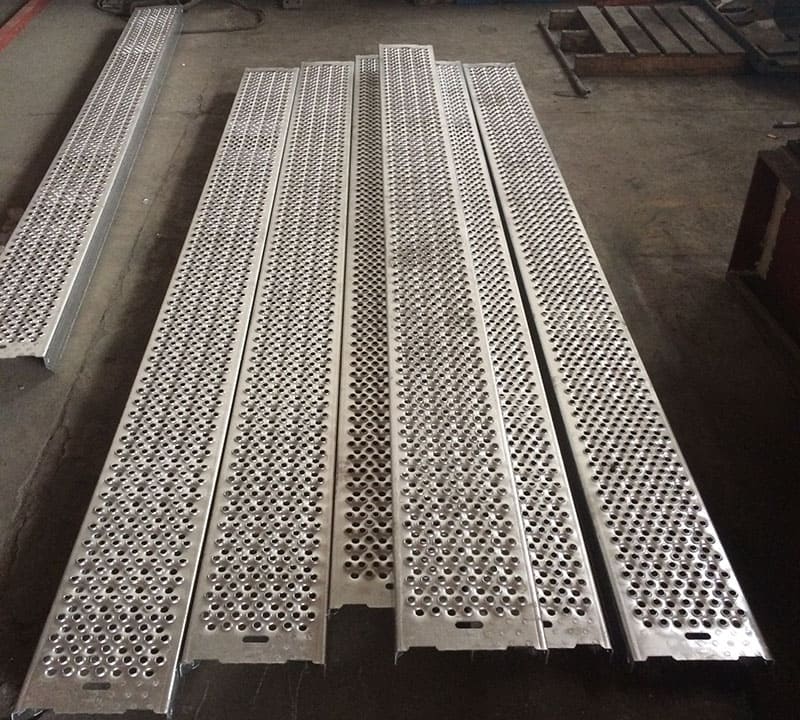
A more focused scaffold plank machine may suit buyers who:
That can be a practical approach if the target plank profile is clearly defined.
A stronger steel walk board machine is often better for buyers who:
For these buyers, machine stability may matter more than the lowest quote.
No. The price depends on punching system, speed, plank type, machine configuration, and build quality.
Usually the biggest factors are perforated vs embossed product type, punch system choice, speed, and overall machine design.
JSR says hydraulic punch is more economical, while punch-machine setups may run faster in some cases.
JSR cites around 4 to 6 m/min in several hydraulic-punch cases and around 10 m/min for some punch-machine applications.
Yes. JSR notes that gearbox can be designed into the machine.
It can be, if the startup clearly understands the target scaffold plank design and market.
You should provide the plank drawing, thickness, hole pattern, width, embossing requirement, and expected output speed.
Yes. JSR’s scaffolding plank pages include project references to Saudi Arabia and Israel.
The biggest mistake is not deciding whether the market needs perforated plank, embossed walkway plank, or another scaffold-board type before choosing the machine.
They may reflect simpler punch logic, lower speed, lighter machine build, or less specialized product capability.
The cost of a scaffolding plank roll forming machine depends on the actual plank product strategy behind it. A perforated scaffold board machine is not the same investment as an embossed steel walk board machine, and hydraulic-punch economics are not the same as punch-machine speed logic.
For buyers entering this category, the best machine is the one that matches the target plank style, production level, and market demand with reliable output quality.