
When buyers evaluate a gutter forming machine, one of the most practical decisions is not only which supplier to choose, but which gutter profile to produce.
The most common buyer question is:
Should I invest in a K style gutter machine or a half round gutter machine?
This decision matters because gutter demand is highly regional. The right rain gutter machine for one market may be the wrong gutter roll forming machine for another.
Choosing the correct profile affects:
So this is not just a technical choice. It is a business decision.
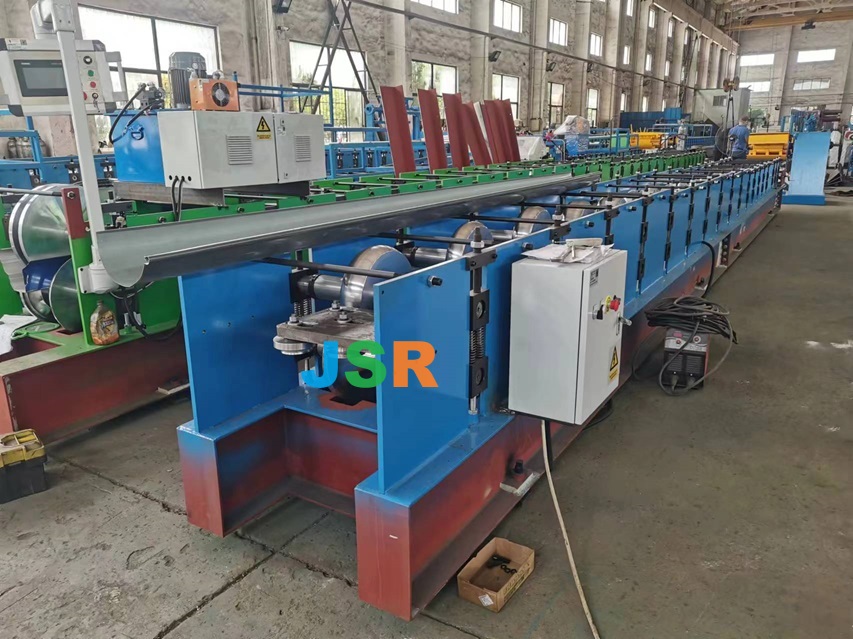
A K style gutter has a more angular decorative profile and is widely used in modern residential and light commercial buildings in many markets.
Buyers searching for a K style gutter machine are often looking for a profile that combines:
In many buyer markets, a K style gutter machine is one of the most commercially practical choices because the product is familiar and widely distributed.
A half round gutter has a rounded, curved profile and is often associated with more traditional, decorative, or architectural gutter styles.
Buyers searching for a half round gutter machine are usually targeting products used in:
A half round gutter machine can be commercially attractive where building style and visual character are important.
The difference is not only shape.
Usually suits broader mainstream demand, especially where modern roof drainage products are common.
Usually suits more style-driven or premium-looking gutter demand.
In practical sales terms:
The better choice depends on what roof drainage style your actual buyers are already using.
A gutter forming machine for export must follow local profile preference.
JSR itself highlights that different gutter designs are made for the Australia market, which is a good reminder that gutter sales are highly region-specific.
That means export success depends less on which profile seems more attractive generally, and more on whether the metal gutter roll forming machine matches the standard shape used in the destination market.
A K style gutter machine is often better when the goal is broader volume, simpler market acceptance, and easier distribution.
A half round gutter machine is often better when the goal is more specialized architectural drainage products or premium-looking roof accessories.
In some markets, the rain gutter machine with the wider distribution path will outperform the more specialized option simply because it moves faster.
Some buyers hope one gutter roll forming machine can cover all profile families, but in practice that depends on machine design and business needs.
The more common and practical approach is:
A gutter forming machine should follow the market, not the other way around.
For many new buyers, a K style gutter machine is often the safer starting point if the market is broad and contractor-driven.
A half round gutter machine may still be the better first move if:
The key is not choosing the more interesting profile. The key is choosing the more sellable profile.
A profile may look attractive but still be hard to sell.
It is not. Gutter demand is highly regional.
The profile choice should come first.
Contractors and distributors usually prefer products they already know well.
A specialized half round gutter machine can be strong in the right market, but weak in the wrong one.
A K style gutter machine produces a more angular profile, while a half round gutter machine produces a rounded gutter profile.
In many markets, a K style gutter machine is more practical for mainstream residential demand.
A half round gutter machine is often more suitable for architectural or style-driven projects.
No. Profitability depends on local demand, distribution ease, and market fit.
Often yes, especially where standard residential drainage products are widely distributed.
Not necessarily. It can be a strong product in the right market.
No. The gutter profile should be confirmed first.
Yes. Many manufacturers start with one gutter roll forming machine and expand later if the market supports it.
The most important factor is what shape your target market actually buys.
Because gutter products are highly profile-specific, and JSR itself highlights different gutter designs for specific markets like Australia.
Choosing between a K style gutter machine and a half round gutter machine affects:
That is why serious buyers should settle the product direction before choosing the gutter forming machine itself.
Choosing between a K style gutter machine and a half round gutter machine is not about which one looks better. It is about which one fits your market better.
If your target market is broad, distributor-driven, and mainstream residential, a K style gutter machine may be the stronger commercial choice. If your market is more architectural, premium, or profile-specific, a half round gutter machine may deserve stronger focus.
The right gutter forming machine is the one that produces the gutter your market is already ready to buy.