
When buyers start evaluating a sandwich panel line, one of the most important decisions is whether to choose a continuous sandwich panel line or a discontinuous sandwich panel line.
This is not just a machine configuration issue. It affects:
Many buyers first search for a sandwich panel machine or sandwich panel production line, but once they go deeper, they quickly discover that line type matters just as much as the core material or panel application.
If the goal is to build a sustainable insulated panel business, choosing between a continuous sandwich panel line and a discontinuous sandwich panel line is one of the most important strategic decisions.
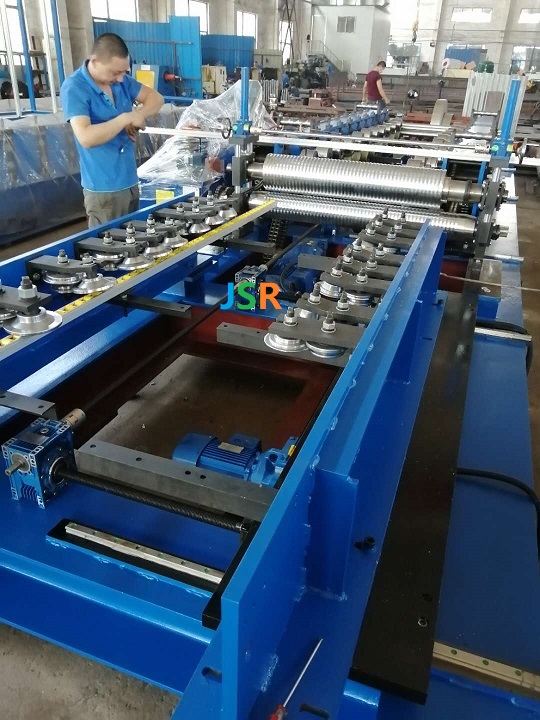
At the simplest level, the difference is this:
Both are valid. The right choice depends on the product strategy, market demand, and investment plan.
A continuous sandwich panel line is a production system where the panel manufacturing process runs in a steady and integrated flow.
In a typical continuous sandwich panel production line, the facings, insulation core process, panel shaping, and output stages are arranged for ongoing manufacturing rather than one-panel-at-a-time batch production.
This type of line is commonly associated with:
Buyers searching for a PU sandwich panel production line or roof wall sandwich panel line often end up looking at continuous solutions when they want strong long-run output.
A discontinuous sandwich panel line is a batch-based system used to produce insulated panels with more production flexibility and lower throughput than a continuous line.
A discontinuous sandwich panel line is often chosen when buyers want:
In some buyer searches, this may also overlap with terms such as:
The exact wording varies, but the commercial logic is often similar.
A continuous sandwich panel line is usually the better choice when the business is built around volume, standardization, and large-scale output.
If your market can absorb large quantities of insulated panels, a continuous sandwich panel production line is often the stronger option.
A roof wall sandwich panel line with continuous production is often preferred when the products are standardized and sold in higher volume.
When output volume is high enough, a continuous sandwich panel line can improve production efficiency and lower average production cost.
If you already serve industrial buildings, commercial construction, cold storage developers, or panel distributors, a continuous sandwich panel line may match your business better.
A continuous sandwich panel production line often suits manufacturers building a serious insulated panel factory rather than testing the market cautiously.
A discontinuous sandwich panel line is often better when flexibility matters more than maximum throughput.
For buyers who want to enter insulated panel production more cautiously, a discontinuous sandwich panel line may be more practical.
If your market requires different panel lengths, varied specifications, or more project-based customization, a discontinuous sandwich panel line can offer useful flexibility.
A cold room panel production line or smaller insulated sandwich panel production line may fit better in a discontinuous format if the demand is more specialized.
If you are not yet certain about long-term volume, a discontinuous sandwich panel line can reduce early risk.
Some buyers do not need the full speed of a continuous sandwich panel line. They need controlled, flexible production that can respond to smaller orders.
| Factor | Continuous Sandwich Panel Line | Discontinuous Sandwich Panel Line |
|---|---|---|
| Production style | Continuous flow | Batch-based |
| Output level | High | Low to medium |
| Automation | Higher | Moderate |
| Flexibility | Lower to medium | Higher |
| Initial investment | Higher | Lower |
| Best for | Standardized volume production | Flexible or customized production |
| Typical business model | Factory-scale manufacturing | Small to mid-scale production |
| Product focus | Roof and wall panels in larger volume | Cold room, custom, or project panels |
This depends on the product and business model.
A PU sandwich panel production line is often associated with higher-end insulated panel manufacturing and may be configured as either continuous or discontinuous depending on output goals.
An EPS sandwich panel machine may be used in more flexible or smaller-scale production settings, though this depends on plant scale and market demand.
A rockwool sandwich panel line may be selected when buyers focus on fire-resistant insulated panels or project-specific industrial wall and roof systems.
The important point is this: material type alone does not decide the line format. The line format should match the factory strategy.
For many manufacturers, a discontinuous sandwich panel line is easier to start with because:
However, that does not mean it is always the better business.
If the market already has strong demand for high-volume roof and wall insulated panels, starting too small can also limit growth.
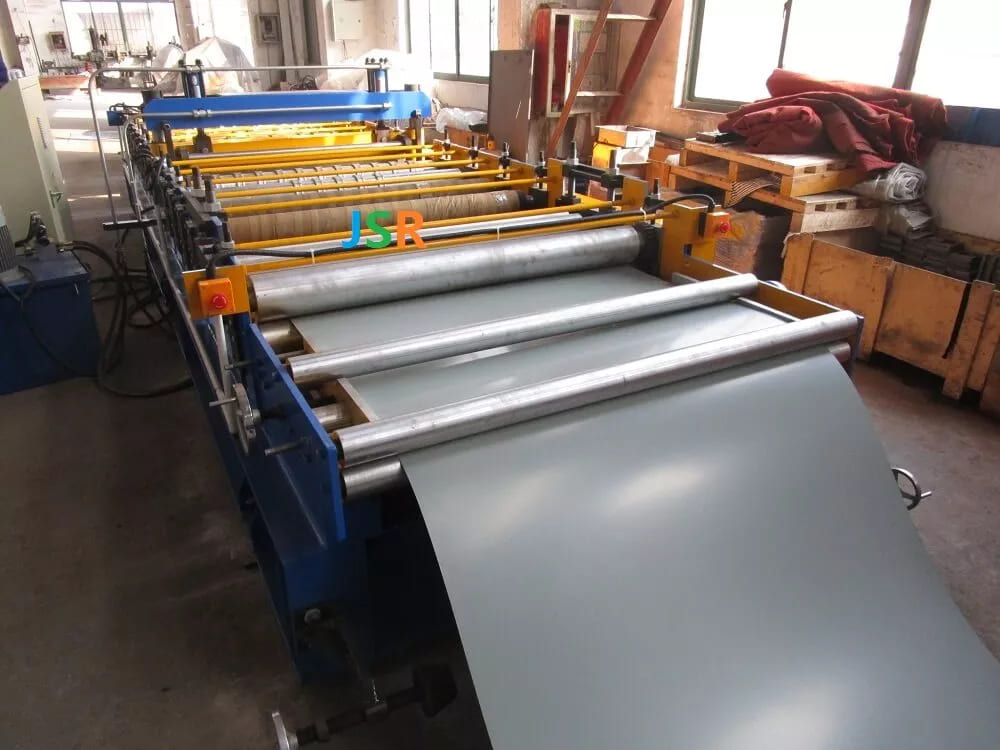
Profitability depends on market fit, not only on machine type.
So the right question is not “Which line is better?”
It is “Which line fits my market, capital plan, and sales channel better?”
A bigger sandwich panel production line is not automatically a better business if the market cannot absorb the output.
If customers expect strong production capacity and stable large-volume supply, a smaller sandwich panel machine setup may become a bottleneck.
The cheaper option is not always the more profitable one.
A continuous sandwich panel line and a discontinuous sandwich panel line support different business paths. The machine should follow the sales model.
Flexibility is useful, but only if the market actually needs variation.
A continuous sandwich panel line is often the right choice for:
These buyers usually care more about throughput, efficiency, and stable mass production.
A discontinuous sandwich panel line is often the right choice for:
These buyers often care more about flexibility and manageable investment.
A continuous sandwich panel line is designed for uninterrupted higher-volume output, while a discontinuous sandwich panel line is designed for batch-based and more flexible production.
No. A continuous sandwich panel line is better only if the market demand and business model can support that level of output.
In many cases, yes. A discontinuous sandwich panel line is often chosen by buyers who want lower initial investment and more flexibility.
A discontinuous sandwich panel line is often easier for a cautious first move, but it depends on how strong the market demand is.
No. A PU sandwich panel production line can be configured in different ways depending on product strategy and factory scale.
For large-scale standardized roof wall sandwich panel line production, continuous systems are often more suitable.
A cold room panel production line may often be more compatible with discontinuous production if customization and smaller batches are important.
Yes. An EPS sandwich panel machine can be part of a more flexible production approach depending on the business model.
The most important factor is matching the sandwich panel line type to the real market demand and sales structure.
Choosing the line based on machine appearance or price alone, without understanding the actual production and sales model.
For buyers considering a sandwich panel line, the decision is not just technical. It affects the entire business.
They usually want to know:
That is why the right supplier discussion should be based on production logic, not only quotations.
Choosing between a continuous sandwich panel line and a discontinuous sandwich panel line is one of the most important decisions in insulated panel manufacturing.
A continuous sandwich panel production line is usually better for high-volume, standardized, large-scale roof and wall panel production. A discontinuous sandwich panel line is often better for flexible, project-based, or smaller-scale insulated panel manufacturing.
The right answer depends on your market, your product strategy, your customer base, and your factory plan. If those are clear, the machine decision becomes much easier.