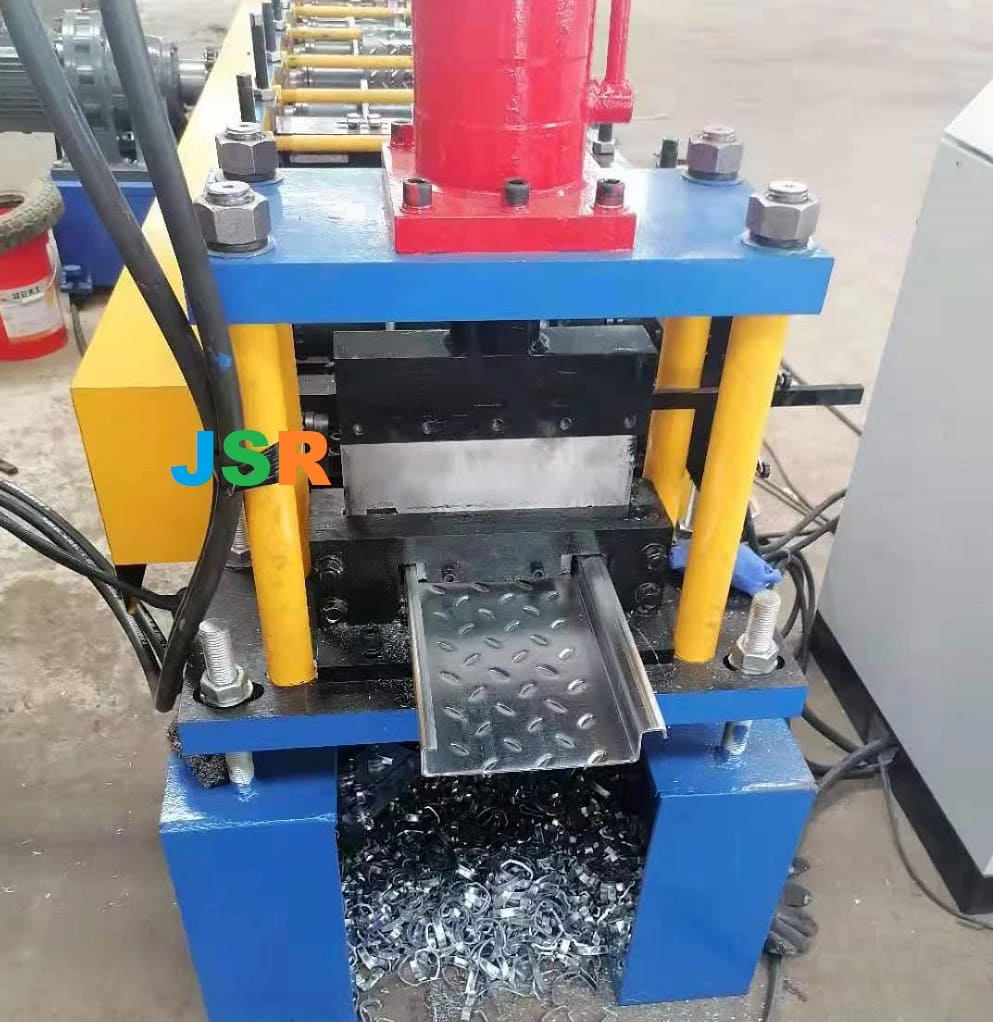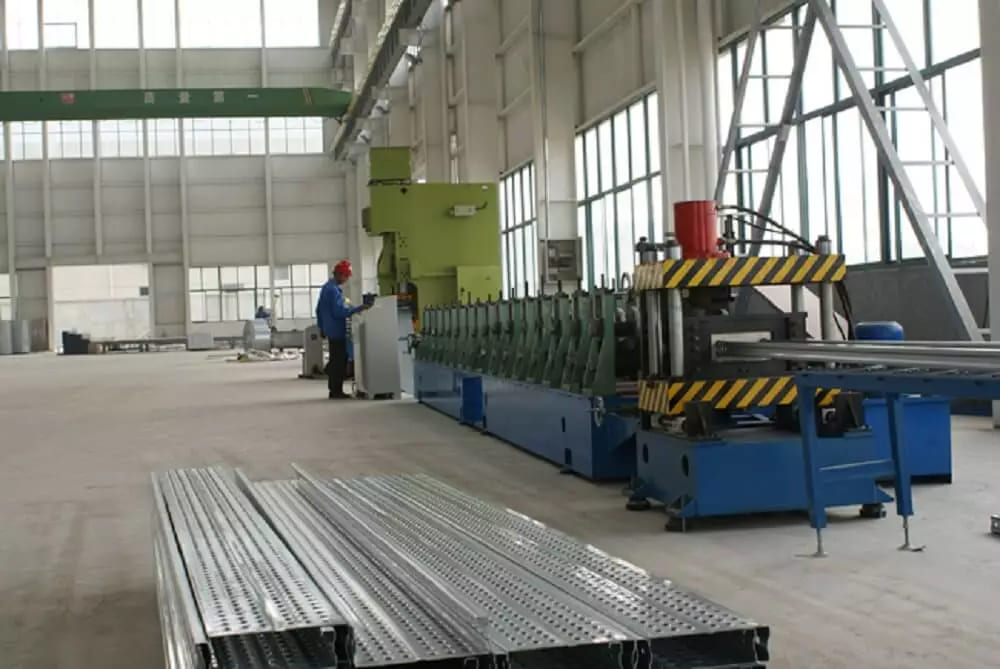

Choosing the right scaffolding plank roll forming machine is an important decision for manufacturers entering or expanding in the steel scaffolding industry. Although different scaffold plank machines may appear similar, their punching capacity, forming accuracy, material compatibility, production speed, and automation levels can vary considerably.
For manufacturers producing steel walk boards, perforated scaffold planks, or galvanized scaffolding decks, selecting the correct equipment can directly influence production costs, product consistency, maintenance requirements, and long-term business performance.
This guide examines the most important technical and commercial factors buyers should evaluate before investing in a steel scaffolding plank making machine.
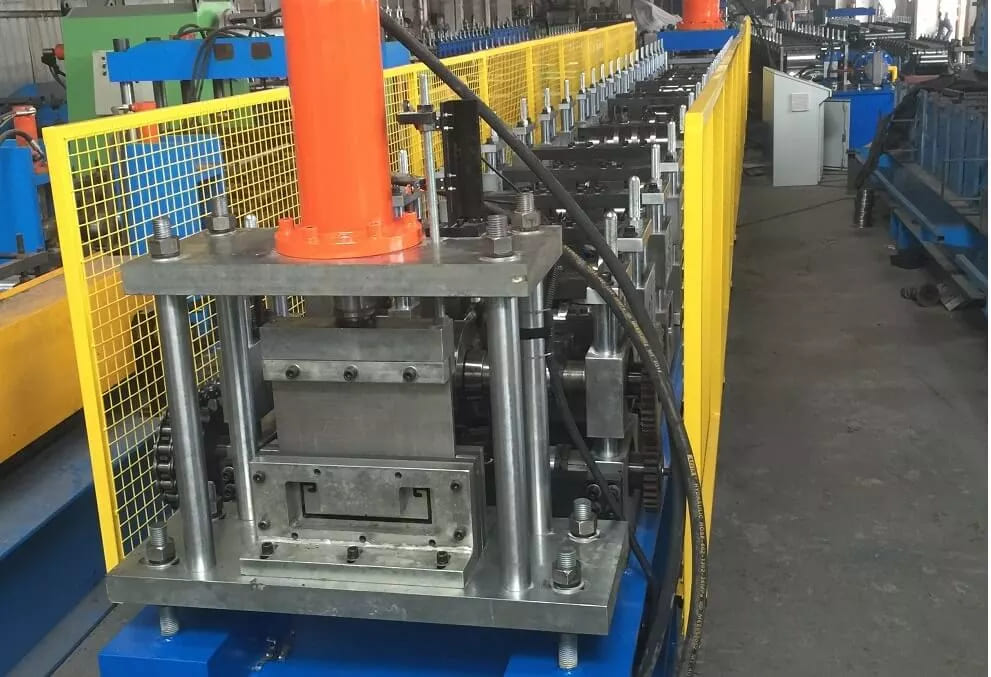
Before comparing equipment suppliers, manufacturers should clearly define the products they intend to manufacture.
Steel scaffolding planks are widely used in construction scaffolds, maintenance platforms, industrial access systems, and temporary working platforms.
Common products include:
Each product may require different forming rollers, punching dies, cutting tools, and material specifications.
For example, a perforated scaffolding plank machine must accommodate the required hole pattern, while an embossed steel walkway plank production line may need dedicated embossing rollers.
Manufacturers should obtain the final plank drawing, including width, thickness, length, edge design, and hole arrangement, before requesting a quotation.
Material compatibility is one of the first technical considerations when purchasing a scaffold plank roll forming machine.
Steel scaffolding planks are commonly manufactured using galvanized steel or other suitable coated steel materials.
The material should be selected according to the product’s structural design, corrosion-resistance requirements, and applicable standards.
JSR Roll Former lists the following reference specifications for one scaffolding plank production line:
| Parameter | Reference Specification |
|---|---|
| Raw material | Galvanized or Galvalume steel |
| Material thickness | 1.0–1.5 mm |
| Reference yield strength | 235 MPa |
| Coil width | Based on the finished plank profile |
| Forming stations | Approximately 16 |
| Roller shaft diameter | Approximately 75 mm |
These specifications describe a reference machine configuration rather than a universal specification for every scaffolding plank production line.
Manufacturers requiring thicker materials, different yield strengths, or special profile geometries should request an engineering evaluation before finalizing the machine design.
A suitable galvanized scaffold plank manufacturing machine must be capable of processing the intended material without excessive deformation, unstable feeding, or damage to protective coatings.
Punching is one of the most important processes in manufacturing perforated steel scaffold boards.
Steel scaffolding planks may include openings or raised features intended to provide drainage and improve surface traction.
The punching process affects:
Two common options are hydraulic punching and mechanical press punching.
A hydraulic punching system is often suitable for moderate-volume production.
Advantages may include:
JSR describes hydraulic punching configurations with production speeds of approximately 4–6 m/min in selected applications.
However, punching time can become a limiting factor when the product requires a large number of perforations.
A mechanical press punching system may be more suitable when production volume is high and the hole pattern is repetitive.
Potential advantages include:
JSR indicates that certain scaffolding plank machines equipped with a punching press can achieve working speeds around 10 m/min.
Actual production speed depends on the hole pattern, press capacity, tooling arrangement, cutting operations, and complete line design.
Buying recommendation: Evaluate the punching system based on the required number of finished planks per shift, not simply the advertised maximum machine speed.
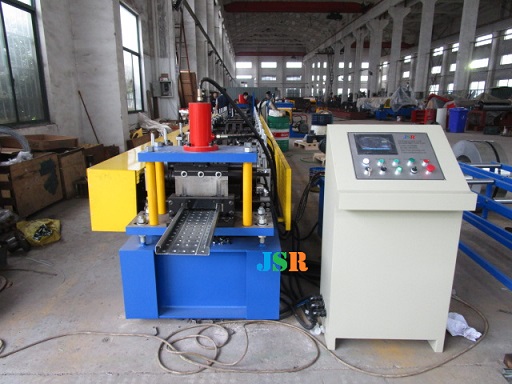
A steel scaffold board roll forming machine must maintain consistent profile dimensions throughout continuous production.
Important mechanical components include:
A rigid machine frame helps maintain alignment during forming operations. Insufficient rigidity can contribute to profile distortion and inconsistent dimensions.
Roller quality affects wear resistance, surface finish, and production stability.
For its reference scaffolding plank machine, JSR lists GCr15 mold steel rollers with heat treatment.
The number of forming stations depends on the complexity of the final profile.
A more demanding profile may require additional forming stages to distribute deformation gradually.
Shaft strength, bearing arrangements, and transmission design should match the material thickness and profile geometry.
JSR lists approximately 75 mm roller shafts in one reference configuration and notes that gearbox transmission can be incorporated into certain machine designs.
Buyers should compare these specifications together rather than assuming that a larger shaft diameter or more stations automatically guarantees superior production quality.
One of the most common mistakes when comparing scaffolding plank roll forming machines is confusing forming speed with finished-product output.
The forming section may be capable of operating at a higher speed than the complete production line.
Actual production may be limited by:
For example, JSR’s reference equipment information distinguishes a roll forming speed of 10–15 m/min from a production speed of approximately 4 m/min in one configuration.
This difference matters when estimating factory output.
A manufacturer should request the supplier to demonstrate production using the actual plank drawing and punching pattern rather than relying on a general maximum-speed statement.
Cutting accuracy is essential for producing scaffold planks that fit correctly into their intended support systems.
Common cutting solutions include hydraulic cutting and specialized saw-cut systems.
JSR describes hydraulic cutting in its standard machine arrangement and also mentions saw cutting for certain special scaffolding plank designs.
When reviewing the cutting system, consider:
Special profiles may need a customized cutting method to preserve the final section geometry.
Buyers should also confirm whether the output requires further end processing, welding, or attachment of support components.
Production-line dimensions can influence the installation cost and practical operation of a steel walk board making machine.
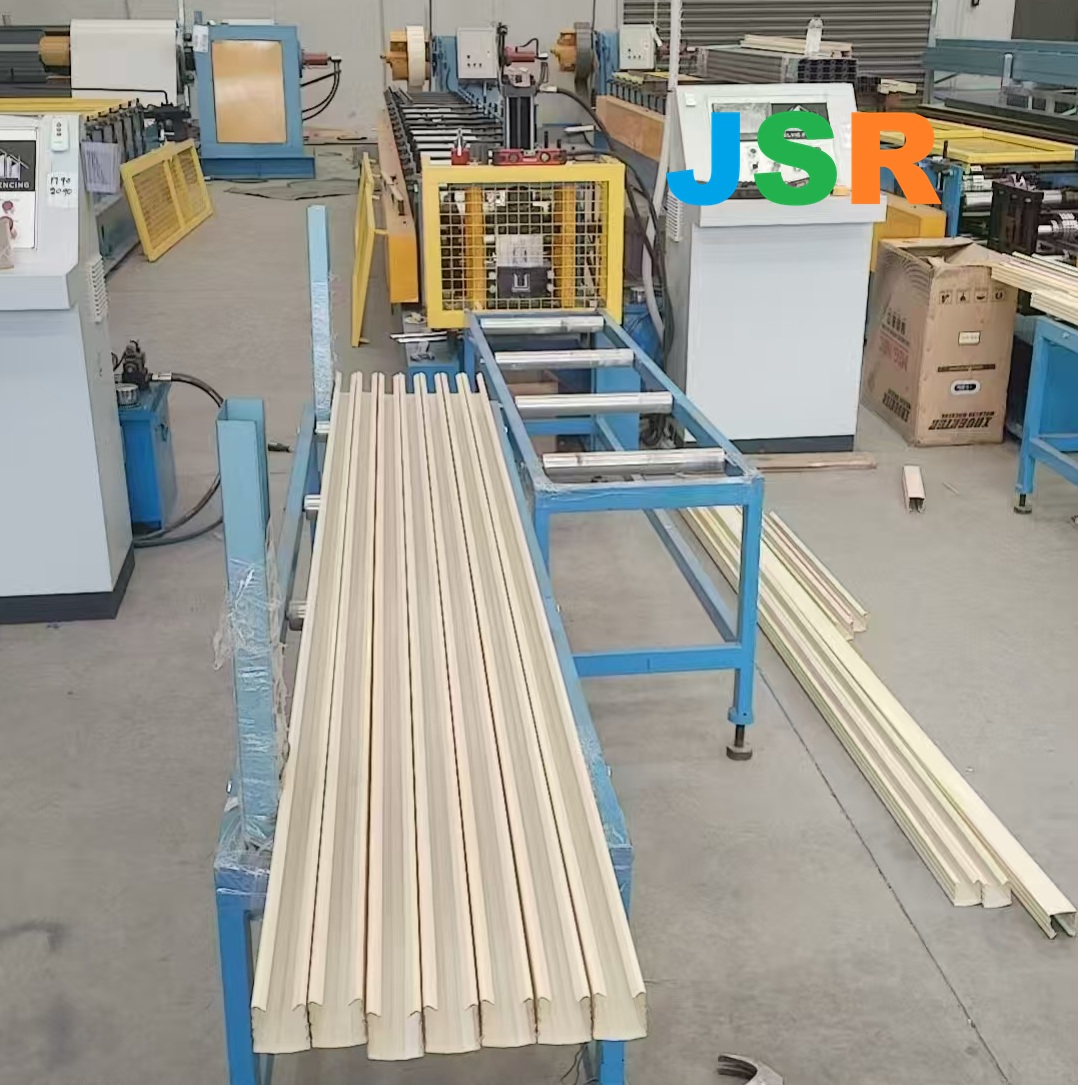
A complete scaffolding plank manufacturing line may include a decoiler, leveling equipment, punching system, roll former, cutting station, control cabinet, and receiving tables.
JSR lists a reference full-line layout of approximately 30 m × 3 m × 1.5 m for one configuration.
Smaller production arrangements may occupy less space, depending on the punching system and product requirements.
Before purchasing, manufacturers should check:
A compact machine is not necessarily the best solution if restricted handling space leads to frequent production interruptions.
Modern scaffolding plank production lines frequently incorporate PLC control systems for coordinated operation.
Automation can support functions such as:
JSR’s reference machine information includes PLC control and frequency-converter arrangements.
However, buyers should confirm the exact components included in their quotation because electrical configurations may vary between customized machines.
A reliable control system helps reduce operator errors and improves production repeatability, particularly during long manufacturing runs.
Steel scaffold planks are used in working-platform applications where structural performance and correct installation are essential.
A well-manufactured profile is only one part of a safe scaffold system.
Buyers should evaluate:
For example, projects subject to U.S. OSHA scaffolding regulations must consider the relevant requirements in 29 CFR 1926.451.
Manufacturers should not assume that a particular material thickness, hole pattern, or roll forming machine automatically makes a plank compliant with a specific safety standard.
Finished products should undergo the engineering validation, inspection, and testing required by the intended market.
A professional equipment quotation should be based on a complete production requirement rather than only a machine name.
Buyers should prepare:
Providing this information allows the equipment supplier to propose a more suitable scaffolding plank manufacturing line.
The most important factor is whether the production line can consistently manufacture the exact scaffold plank required by the buyer’s market. This includes material thickness, profile dimensions, punching accuracy, and finished length. A machine with a higher advertised speed is not necessarily better if it cannot meet the required product specifications.
These names are often used for closely related equipment. A scaffold plank machine generally produces steel platform boards for scaffolding systems, while a steel walk board machine may also be marketed for walkway or platform applications. Buyers should compare the actual finished profile and its intended use rather than relying on the machine name alone.
Yes. Machines designed for galvanized steel can produce coated scaffold planks, provided the material grade and thickness fall within the equipment’s specified capacity. JSR lists galvanized and Galvalume steel coils as suitable materials for one of its reference machine configurations. The coating type and forming requirements should be confirmed before production.
The required number depends on profile complexity, forming depth, material properties, and tolerance requirements. JSR lists approximately 16 forming stations in one reference configuration. However, a custom scaffolding plank design may require a different forming arrangement.
Hydraulic punching may be more economical for moderate output, while mechanical press punching can be advantageous for higher-volume production with repetitive perforation patterns. The best choice depends on the hole design, punching frequency, required output, and total equipment investment. Request a test using your actual product drawing.
Some machines can accommodate related dimensions through adjustment or specially designed tooling. However, not every scaffold plank machine supports automatic width changes. Significant differences in profile geometry may require additional tooling or a separate forming line.
Yes. A custom scaffold plank roll forming machine can be engineered around a buyer’s profile drawing, material specifications, punching arrangement, and cutting requirements. Customization should be reviewed before manufacturing because unusual end shapes or reinforcement details may require additional processes.
Ask the supplier to conduct a trial using the specified material thickness, punching pattern, and finished plank length. Record the number of acceptable planks produced over a defined operating period. This gives a more useful result than evaluating the roll forming section’s maximum speed alone.
Important checks include dimensions, hole positions, cut quality, material condition, coating damage, and structural performance where required. Buyers should also confirm product compatibility with the intended scaffold system. Required testing and certification depend on the target market and application.
Provide your scaffold plank drawing, steel grade, thickness range, hole or embossing pattern, required production capacity, and destination market. JSR can then review the technical requirements and propose an appropriate production-line configuration.
Choosing a scaffolding plank roll forming machine requires careful evaluation of product design, punching capacity, mechanical construction, automation, actual production speed, and finished-product quality.
Whether a manufacturer needs a perforated steel scaffold plank machine, a galvanized walk board roll forming machine, or a customized scaffold deck production line, the equipment should be selected according to real manufacturing requirements.
For buyers planning a new production facility or upgrading an existing line, JSR Roll Former offers scaffolding plank forming solutions that can be evaluated against specific customer drawings and production goals.
Explore JSR’s equipment: Scaffolding Planks Roll Former