
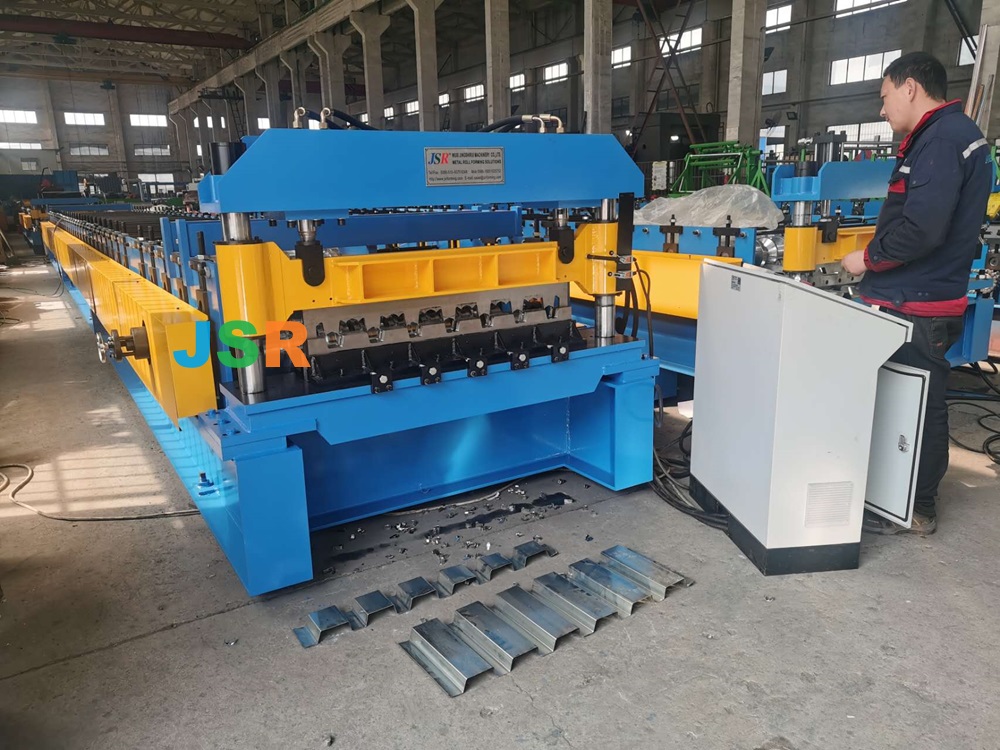
When manufacturers begin exploring structural sheet production, one important question often appears early:
Should I produce floor deck or roof deck?
At first glance, the two categories seem related. Both are profiled steel products. Both are used in building systems. Both may come from roll forming equipment. Because of that, some buyers assume the decision is simple.
In reality, floor deck and roof deck often serve different construction purposes, customer groups, and market opportunities. Choosing the right direction affects not only the machine configuration, but also your sales path, project type, and long-term positioning.
This article is designed to help buyers think through that decision from a business and market perspective.
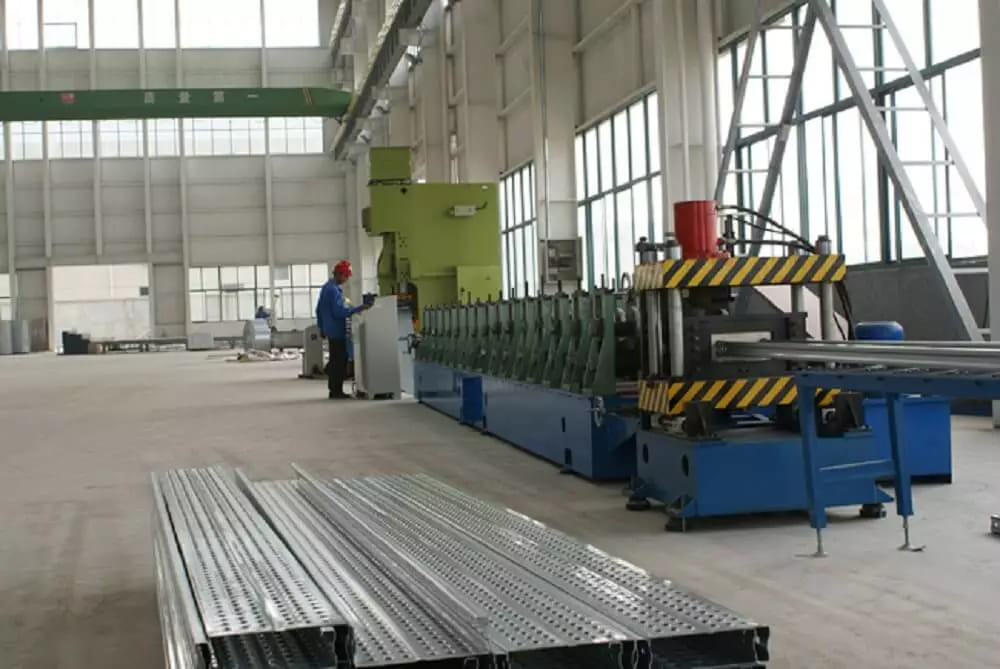
Floor deck is mainly used as part of floor slab systems in steel construction. It supports concrete during pouring and may become part of a composite structural floor system.
Roof deck is mainly used in roof assemblies. It supports roof systems, insulation layers, and other top-structure components, depending on the building design.
The main difference is in function. Floor deck is tied more directly to slab construction. Roof deck is tied to roof system support.
Some manufacturers treat the choice as a minor product variation. It is not.
The decision affects:
That is why it deserves careful thought.
You should lean toward floor deck production if your market has these characteristics.
Floor deck is strongly connected to steel construction systems, especially in multi-story commercial or industrial projects.
If contractors and engineers in your target market already use concrete-on-deck systems, floor deck can be a very relevant product.
Floor deck often gives manufacturers a more structural, project-linked product category.
Floor deck demand is often associated with contractors, steel structure companies, and larger construction supply chains.
Roof deck may be the better direction if your market focuses more on roofing systems than floor slab systems.
In some markets, roof-related steel profiles may have wider demand than structural floor deck.
Depending on the product type, roof deck may be easier to explain and sell into existing roofing or building-material channels.
If the local building practice uses profiled steel for roof substrate applications, roof deck can be a practical product direction.
Roof-related products may connect more naturally to roofing contractors and related supply chains.
| Factor | Floor Deck | Roof Deck |
|---|---|---|
| Main function | Composite floor slab support | Roof support system |
| Construction role | Structural floor application | Roofing assembly support |
| Typical customer | Steel contractors, structural builders | Roofing-related building suppliers |
| Product positioning | More structural | More roof-system oriented |
| Entry barrier | Moderate to higher | Moderate |
| Project connection | Strong | Moderate to strong |
| Demand pattern | Often project-based | Depends on local roof system usage |
In many markets, floor deck is seen as the more structurally critical product because it participates directly in floor construction systems. That often means:
However, that does not automatically mean floor deck is always the better business. A product is only better if it matches local demand.
That depends on your market.
A smart manufacturer studies the construction habit of the target region before choosing.
Both can be good businesses, but the logic is different.
This question comes up frequently. Technically, buyers often hope for flexibility, but in practice the answer depends on:
In many serious production setups, manufacturers prefer to avoid excessive compromise. A machine built specifically for the target product often gives better stability and output quality.
Trying to cover too many different structural products with one line can reduce efficiency and production confidence.
A new buyer should not decide based on product name alone. Ask the following:
The answer usually becomes much clearer once these questions are answered honestly.
Many manufacturers choose one of three practical paths.
If one category clearly dominates in your market, follow that demand first.
Some buyers choose the product that is easier to sell and support before moving into more structural categories.
Some manufacturers begin with one product and later expand into adjacent structural systems.
The key is not to force a market that is not ready.
Do not assume your market uses the same systems as another region.
A more structural product is not automatically the better first business if the market is weak.
A product must match its real buyers, not just engineering theory.
Too much compromise can weaken production stability.
Floor deck is mainly used in floor slab systems, while roof deck is used in roof support systems.
Floor deck is often more directly connected to structural slab construction.
It depends on the market. The better choice is the one with stronger and clearer local demand.
In many cases yes, especially commercial and industrial steel construction projects.
It can be, depending on whether roofing-related supply channels are stronger in your market.
Yes, many manufacturers expand once they understand demand and establish stable production.
No. Product-market fit is more important than assumed margin.
Often floor deck, because of its structural profile depth and application demands.
Study local construction usage and choose the product with clearer real demand.
Market fit, buyer type, and practical sales opportunity.
Choosing between floor deck and roof deck affects machine design significantly.
It can influence:
That is why serious buyers should decide the product path first, then confirm the machine.
When buyers compare floor deck and roof deck, the decision is usually not theoretical. It is practical.
The real questions are:
JSR Roll Former is often evaluated on how well the machine solution fits that real production logic.
Choosing between floor deck and roof deck is not about deciding which product sounds more important. It is about deciding which product fits your market, your customers, and your business plan more accurately.
If your target market is strongly tied to steel frame buildings, composite slab systems, and project-driven construction, floor deck may be the better choice.
If your market is more roof-system oriented, roof deck may deserve stronger attention.
The right answer is the one that connects machine investment with actual commercial opportunity.