
Manufacturers entering light steel profile production often face an important product decision early on:
Should I focus on stud and track profiles or furring channel products?
Both categories are used in interior construction. Both are common in drywall-related systems. Both can be produced from galvanized steel coil through roll forming. Because of that, many buyers assume the difference is only technical.
In practice, the decision affects market positioning, customer type, product range, and machine selection. That is why it deserves careful business thinking.
This article helps buyers compare the two product directions and decide which one makes better sense for their market.
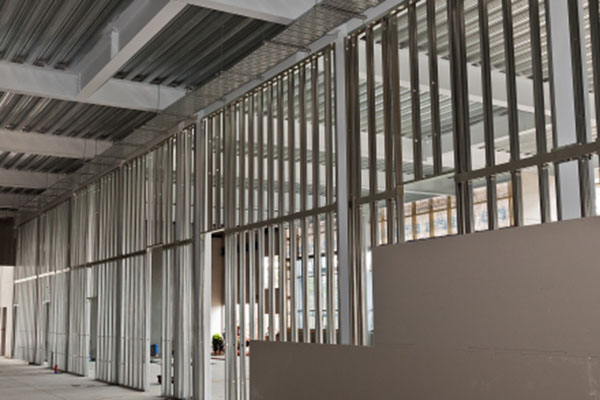
Stud and track profiles are mainly used to build partition wall framing systems. They create the main skeleton of drywall partitions.
Furring channels are mainly used in ceiling systems, wall leveling systems, and support structures for finishing layers.
In simple terms:
That difference matters commercially because the buyer groups and usage volume may differ.
You should focus on stud and track if your market has the following characteristics.
If office fit-out, commercial renovation, apartment interiors, and partition systems are common, stud and track may have stronger demand.
Many regions rely heavily on metal stud and track systems for interior framing.
Stud and track profiles are often sold in large quantity and have stable contractor demand.
Stud and track production offers a straightforward route into drywall framing products.
Furring channel may be the better choice if:
In some markets, suspended ceilings and interior finishing systems drive large demand for channels and related profiles.
Furring channels are useful where installers need support frames behind boards or finishing materials.
In some cases, furring channels can be a practical complementary product rather than the main framing product.
Different contractor groups may prefer different profile families.
| Factor | Stud and Track | Furring Channel |
|---|---|---|
| Main use | Partition wall framing | Ceiling and support channel systems |
| Product role | Main wall skeleton | Secondary support or ceiling framing |
| Demand type | Broad drywall framing demand | Finishing and ceiling support demand |
| Customer type | Drywall contractors, interior builders | Ceiling installers, finishing contractors |
| Volume potential | High | Moderate to high |
| Product positioning | Core framing product | Supporting system product |
That depends on how interior systems are used in your market.
The right answer depends on actual local construction practice.
For many manufacturers, stud and track becomes the main product, while furring channel may be added later as a related supporting category.
In some cases, related light steel product categories can be addressed through flexible machine design, but buyers should be careful not to confuse possible with optimal.
Trying to cover too many products with one line can affect:
If the market is clear, a more focused product plan is often better than over-flexibility.
There are several workable approaches.
This is common when the market is strong in drywall wall framing.
This helps the manufacturer build sales confidence before expanding the profile family.
This can work well if the manufacturer already has a clear channel to drywall and interior contractors.
The best strategy depends on how complete your market access is.
Online popularity does not always reflect local market demand.
What contractors really use matters more than generic product terms.
Different profile families may move through different contractor and distributor channels.
The product strategy should be clear first.
Stud and track are mainly used for partition wall framing, while furring channel is mainly used in ceiling or support systems.
Stud and track is generally the core framing product for wall systems.
In many markets, stud and track is the clearer entry point because the product role is easy to understand and demand is broad.
Not necessarily. In some markets it is widely used, especially where ceiling systems are strong.
Stud and track often has stronger volume potential where partition systems are active.
Yes. Many manufacturers build their main light steel product line step by step.
No. Product-market fit matters more than assumed margin.
Stud and track is usually more directly tied to drywall wall framing contractors.
Furring channel is more closely linked to suspended ceiling and support channel applications.
Study what interior systems are actually used in your target market and match the machine to that demand.
The choice between stud and track and furring channel affects:
That is why serious buyers should decide the market direction first, then evaluate the machine accordingly.
In real purchasing decisions, the discussion is usually not abstract.
Buyers are really asking:
Those are practical questions, and they matter more than generic product descriptions.
Choosing between stud and track and furring channel is not about deciding which product sounds more technical. It is about deciding which one better fits your market, your customer base, and your business plan.
If partition wall systems dominate your market, stud and track is often the stronger main product.
If ceiling systems and finishing supports are the bigger demand, furring channel may deserve stronger focus.
The correct decision is the one that matches production capability with actual sales opportunity.